


Handmade in Wales: How We Make Our Weightlifting Belts
In this article
Every ModiFit weightlifting belt is made by us, by hand, in our workshop in Bridgend, South Wales.
Not designed here and manufactured somewhere else. Not ordered from a factory with our logo added afterwards.
Actually made here.
The video below shows a small part of the process.
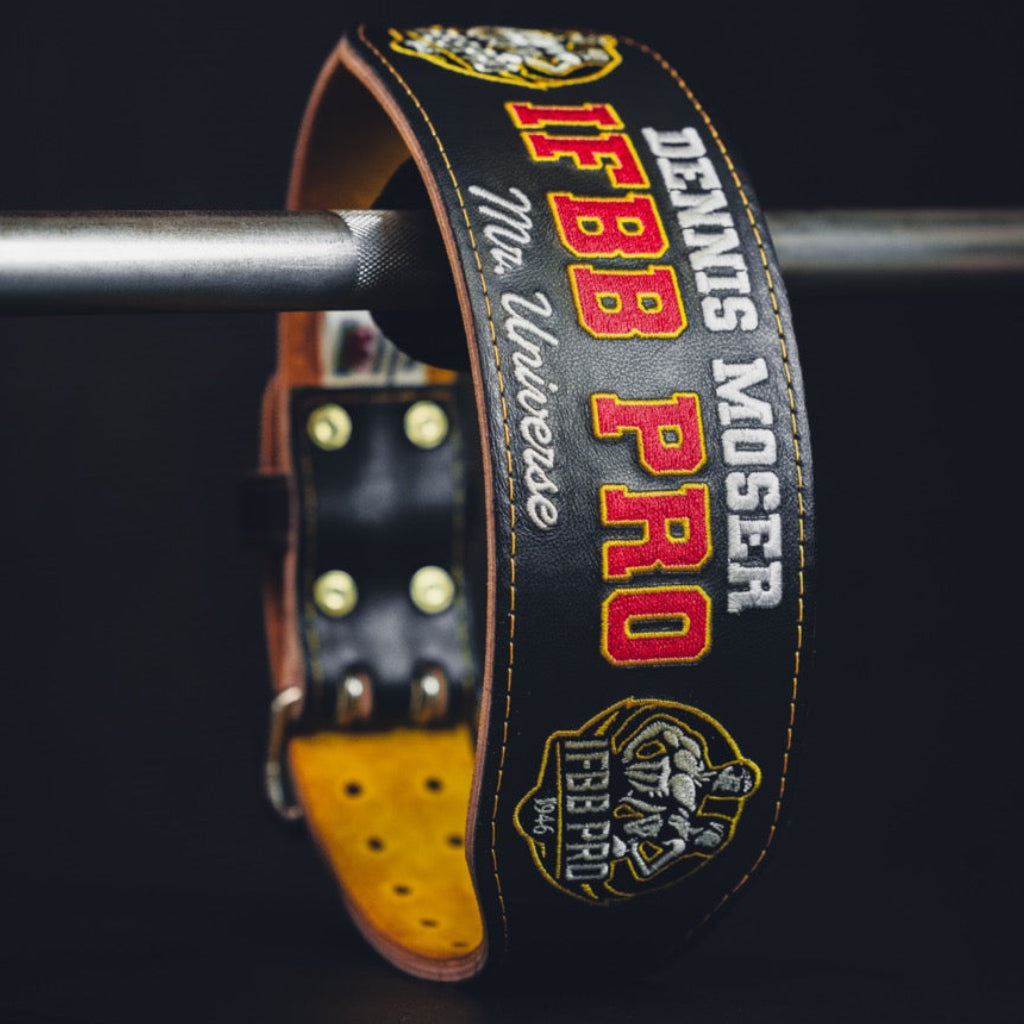
In the video, Ryan is working on the yellow suede lining of a custom Olympic weightlifting belt. The embroidered section has already been completed and he's skiving the suede around the shape of the belt before it moves on to the next stage of manufacture.
It might look like a fairly simple job. It isn't.
What is he actually doing?
Skiving is the process of removing material from the edge of leather or suede.
Ryan works around the complete perimeter of the belt, following its shape and carefully reducing the thickness of the suede towards the edge.
That matters when several layers eventually come together. Without properly preparing those layers, you end up with unnecessary bulk around the edge and a much less refined finished belt.
It's one of those jobs most customers will never know happened.
But they'll notice the difference in the finished product.
Why do we still make our belts in Wales?
We could have outsourced our belt manufacturing years ago.
There are factories in Pakistan and China producing huge quantities of weightlifting belts, and financially it would almost certainly have been easier to send a specification overseas, order containers of them and concentrate entirely on selling them.
But that isn't what we wanted to build.
We wanted to actually make weightlifting belts.
There's something satisfying about starting with sheets of leather, rolls of suede, thread, buckles and somebody's idea for a design, then turning all of it into a finished product that they'll potentially train in for years.
It also gives us control over what goes into them.
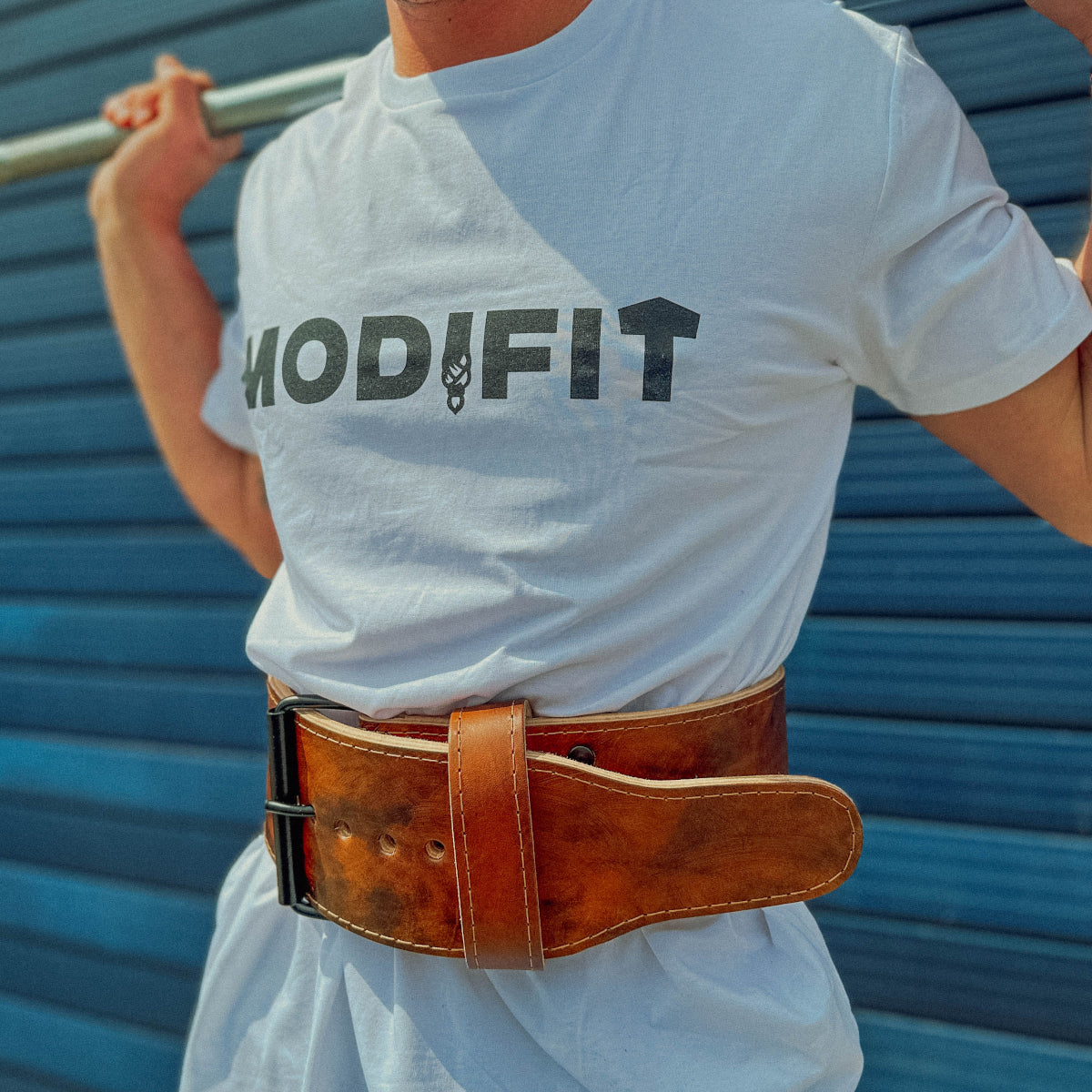
Our custom weightlifting belts use an Italian vegetable-tanned leather core, with materials including English suede and Italian upholstery leather depending on the design. Our current custom belt specification includes a 4-inch back tapering to approximately 2.5 inches around the sides and front, with a padded back section.
A custom belt isn't just a printed design
A lot happens between somebody placing an order and the finished belt leaving our workshop.
The artwork has to be prepared. Custom embroidery needs to be digitised and stitched. Leather and suede need to be cut. Layers need to be prepared, bonded and stitched. Edges have to be finished. Holes and hardware need to be added. Then the finished belt is inspected before being packed.
And because we manufacture them ourselves, we're not restricted to choosing designs from a factory catalogue.
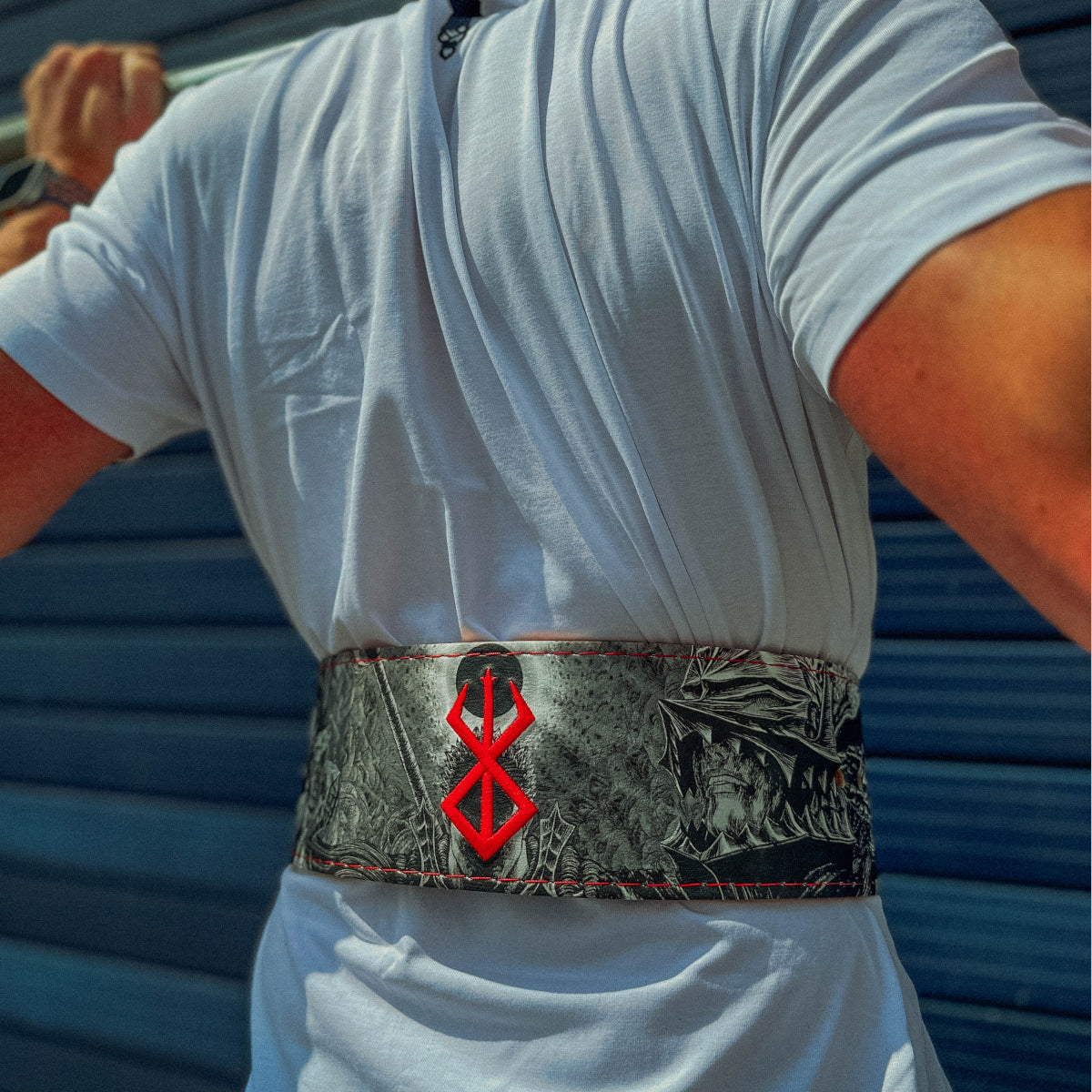
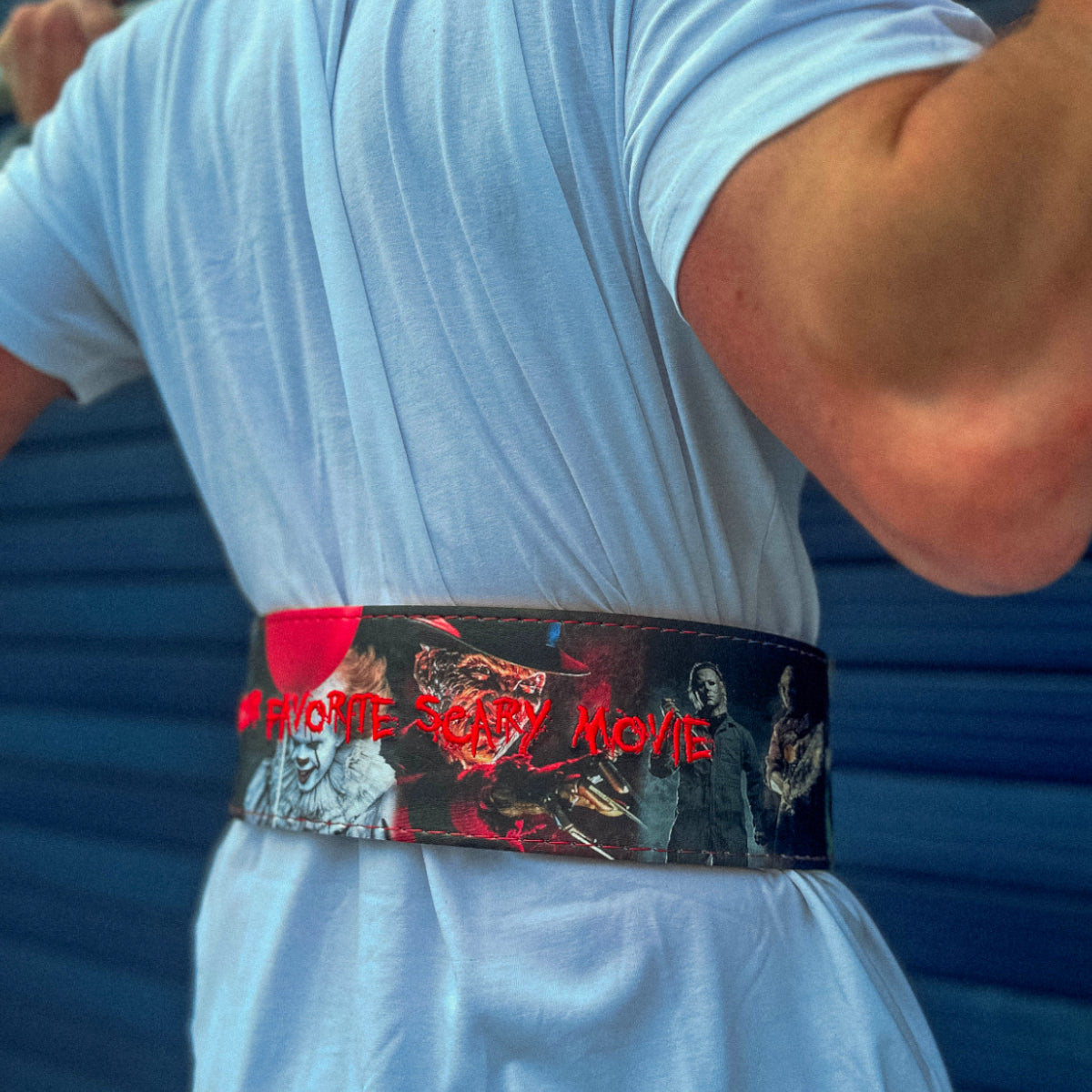
Customers can send us an idea, artwork, photographs, logos, characters, text or sometimes little more than a rough description of what they want. Our design team redraws the belt and sends the design for approval before manufacture begins.
That ability to combine design and manufacture under one roof is a large part of what makes our custom belts different.
British manufacturing is worth keeping
We're proud that something as niche as a custom weightlifting belt is still being manufactured in Britain.
We're not pretending it's the cheapest way to make them.
It isn't.
There are faster ways to scale a business than having people standing in a workshop cutting leather, embroidering suede, operating sewing machines and finishing belts individually.
But there's also something considerably more interesting about seeing a belt leave our workshop and knowing that a few days earlier it was just a collection of raw materials sitting on a shelf.
That's why we still do it.
Designed in Wales. Made in Wales. Built to be lifted in anywhere.


